1
Add a subcontractor
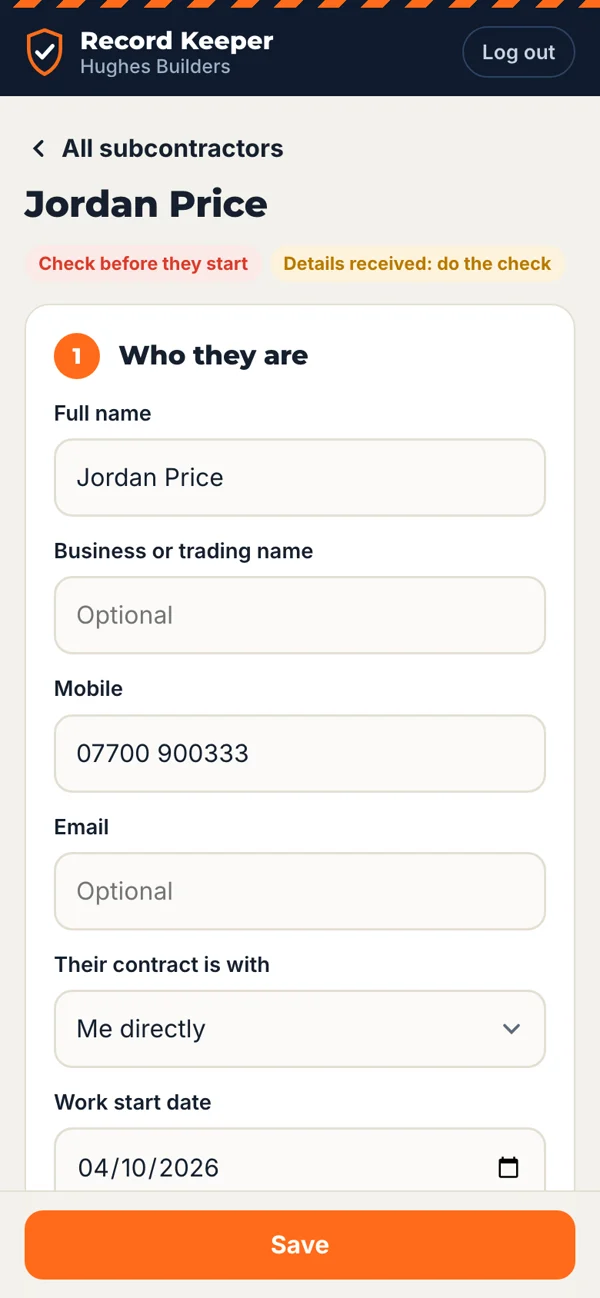
Their name and mobile number. It takes about ten seconds, and they show as red until they're checked.
From 1 October 2026, UK right to work checks cover self-employed subcontractors, not just employees. Miss one and the fine is up to £45,000 per worker. The Record Keeper does the checks, the records and the reminders, from your phone.
No paperwork to chase and nothing to remember. The Record Keeper works in your phone's browser, so there's no app to install.
Their name and mobile number. It takes about ten seconds, and they show as red until they're checked.
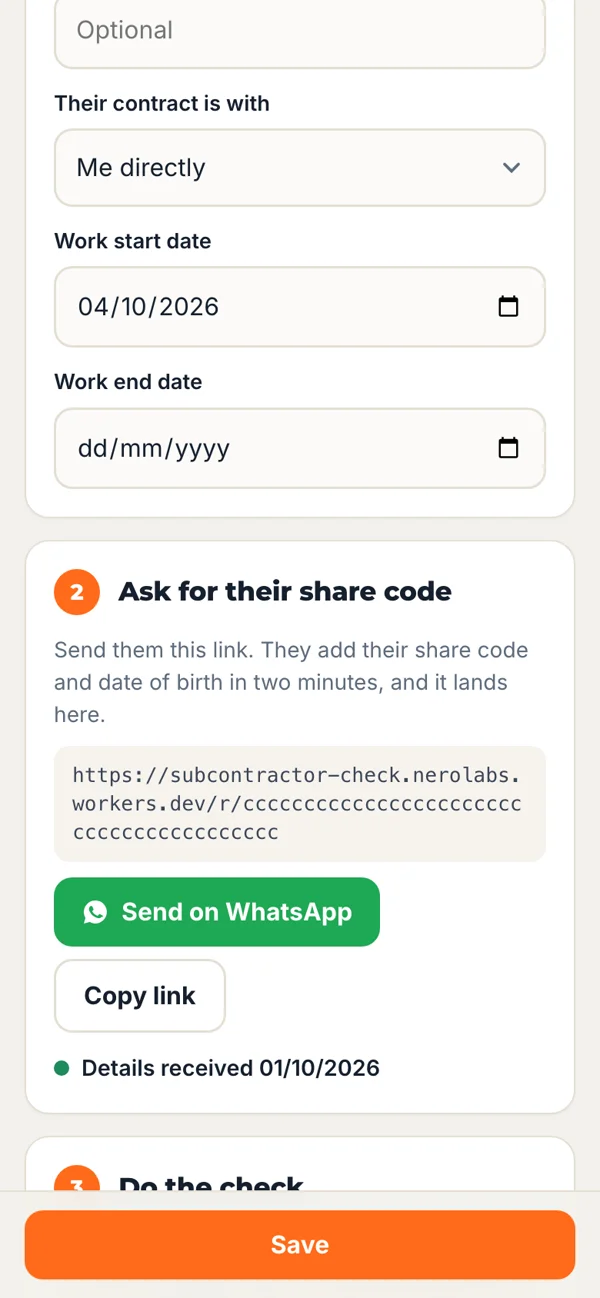
Tap "Send on WhatsApp" and it goes from your own phone. They add their share code and date of birth in two minutes, and it lands in your account.
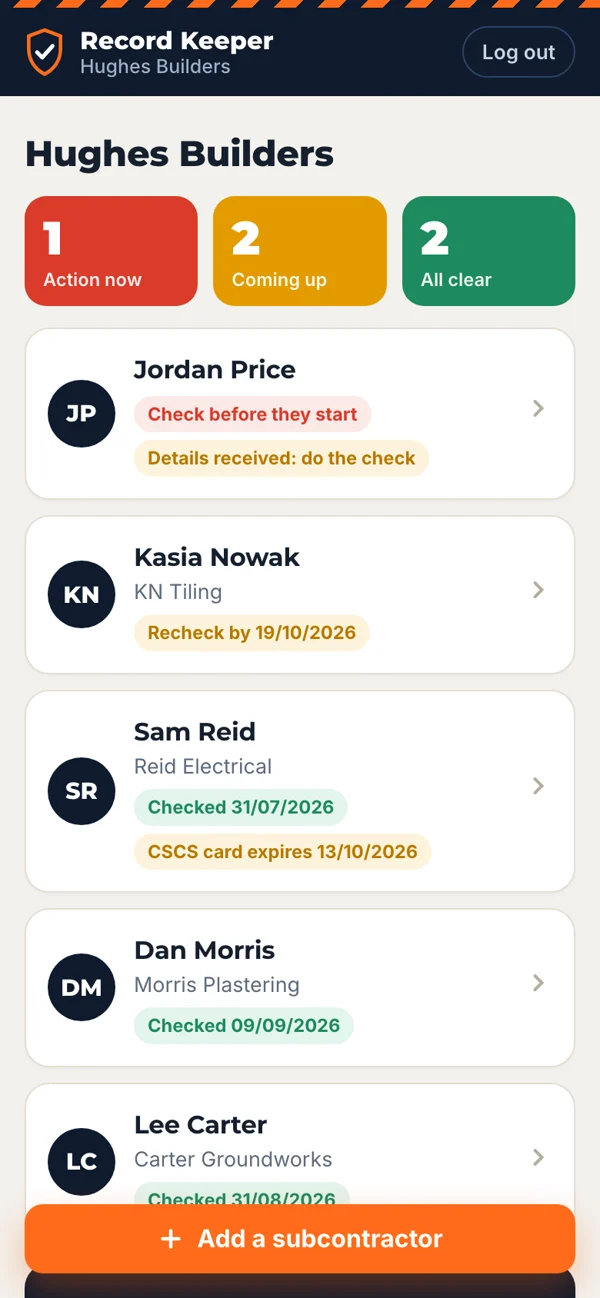
Do the check, save the proof, and every recheck, insurance renewal and CSCS card goes into your phone's calendar with an alert on the day.
The rule isn't a one-off. Every new subcontractor needs checking before day one, every time-limited permission needs rechecking, and every record has to be kept for two years after the work ends. The Record Keeper does the remembering for you.
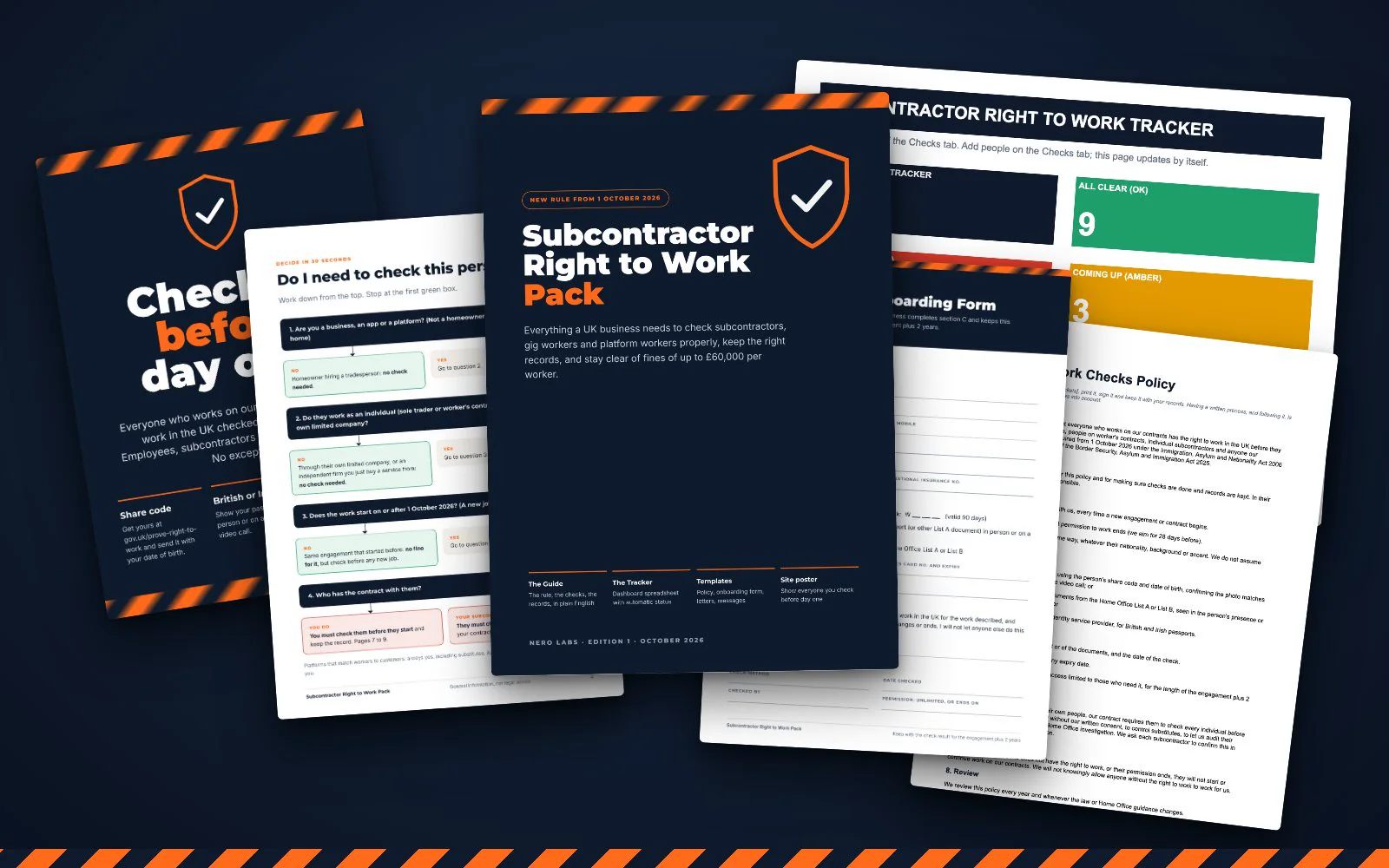
Sorted in 20 minutes. Check every subcontractor properly, keep the proof the Home Office asks for, and protect yourself if a fine tries to move up the chain. No solicitor, no software to learn.
Or get it free with the Record Keeper.
Our promise: if a file is faulty or missing, email us and we'll fix it or refund you. Free updated files when the Home Office finalises its guidance. Secure payment by Stripe, instant download. Terms
Answer 4 quick questions. Based on the Home Office's draft guidance for the rules that started on 1 October 2026.
Because you contract directly with an individual to do work, you need a right to work check before they start. If you skip it and they turn out not to have the right to work, the fine is up to £45,000 per person, or £60,000 for a repeat breach.
The business with the direct contract (your subcontractor) must do the check. But from 1 October 2026 a fine can move up the chain to you if your subcontractor can't be found, or if you didn't put the required protections in place. To protect yourself, the draft Home Office code says your contracts should:
And keep evidence that you did all of this. The pack's Chain Protection Letter covers it.
Let the Record Keeper do this for youFrom 1 October 2026, online platforms that match individuals to customers ("online matching services") must check those individuals, including substitutes who take a job in someone else's place. The draft code also expects identity to be re-verified at least once in any 24 hours of activity. Fines are up to £45,000 per worker, or £60,000 for a repeat breach.
Let the Record Keeper do this for youFor agency workers, the agency is the employer and does the right to work check. The business that hires the worker through you does not, according to the draft Home Office guide (Example 12). Make sure your own checks and records are up to date.
The new rules are aimed at businesses. A tradesperson who runs their own business and works for the public is "operating in business on their own account", which the draft code says is not in scope. The Home Office's own example says a self-employed plumber with many customers does not need a check.
The draft Home Office guide says that when you hire someone through their own limited company (a personal service company), you don't need to check them. Their company is responsible for its own people.
Buying a service from someone who runs their own business and has their own customers is an ordinary business-to-business purchase. The draft code says this is not covered. The new rules catch individuals who do work you have been contracted to provide.
The draft code says a fine for the newly covered groups can only be given where the work started on or after 1 October 2026. Any new contract or new job after that date is covered, even with someone you've used for years. Many firms are checking everyone now so they're ready.
Let the Record Keeper do this for youIt takes about two minutes on gov.uk and it's free. The code starts with W and lasts 90 days.
How to get your share codeSection 48 of the Border Security, Asylum and Immigration Act 2025 came into force. It extends the illegal working rules from employees to people on worker's contracts, individual sub-contractors and online matching services, and lets the Home Office fine a business further up a contract chain in some cases.
The draft Home Office guide applies the same three check methods to all the newly covered arrangements. The gov.uk service is still worded for "job applicants", so keep an eye on the final guidance.
For as long as the person works for you, plus 2 years, then destroy them securely. The Record Keeper reminds you when that keeping period has passed.
Do a follow-up check before it expires. If they have a pending application, the Home Office Employer Checking Service can give a Positive Verification Notice, which protects you for 6 months.
No. You still do the official check (the share code online, original documents, or a certified digital ID provider). The Record Keeper collects the details, stores the result and the date, and reminds you when to check again.
Only you. Your business decides what's stored, and we act only as your data processor. Records are deleted when you delete them or close your account. Read the privacy policy.
Yes, any time. You keep access until the end of the period you've paid for, and you can export your records first. If you buy as a consumer, you can cancel within 14 days of first subscribing for a full refund.